
Something shifts when you stand at the edge of a canyon at dawn. Or watch bioluminescent waves break against a dark shore. The chest loosens. The mental chatter quiets. Psychologists call this feeling awe, and it does far more for your mind than leave a pleasant vacation memory. It works as a measurable intervention. I have spent the last decade weaving clinical practice with travel, and the research on awe has changed how I prescribe rest, recovery, and perspective to clients who feel stuck.
Two years ago, a client named Miriam sat in my office, exhausted from grief. She mentioned a trip to Iceland she had almost cancelled. “I stood under the aurora,” she said quietly. “And for the first time in months, I felt small in a way that helped.” That sentence stayed with me. It is the whole science in miniature.
The Science
Awe is the emotion we feel when we encounter something vast that challenges our usual frame of reference. Researchers Dacher Keltner and Jonathan Haidt described it as “the feeling of being in the presence of something greater than yourself.” What makes awe remarkable is not the feeling itself but what follows it. Studies from the University of California, Berkeley, show that awe reduces activity in the default mode network — the brain region tied to rumination and self-focused thinking. That internal critic, the one replaying yesterday’s awkward conversation, gets quieter.
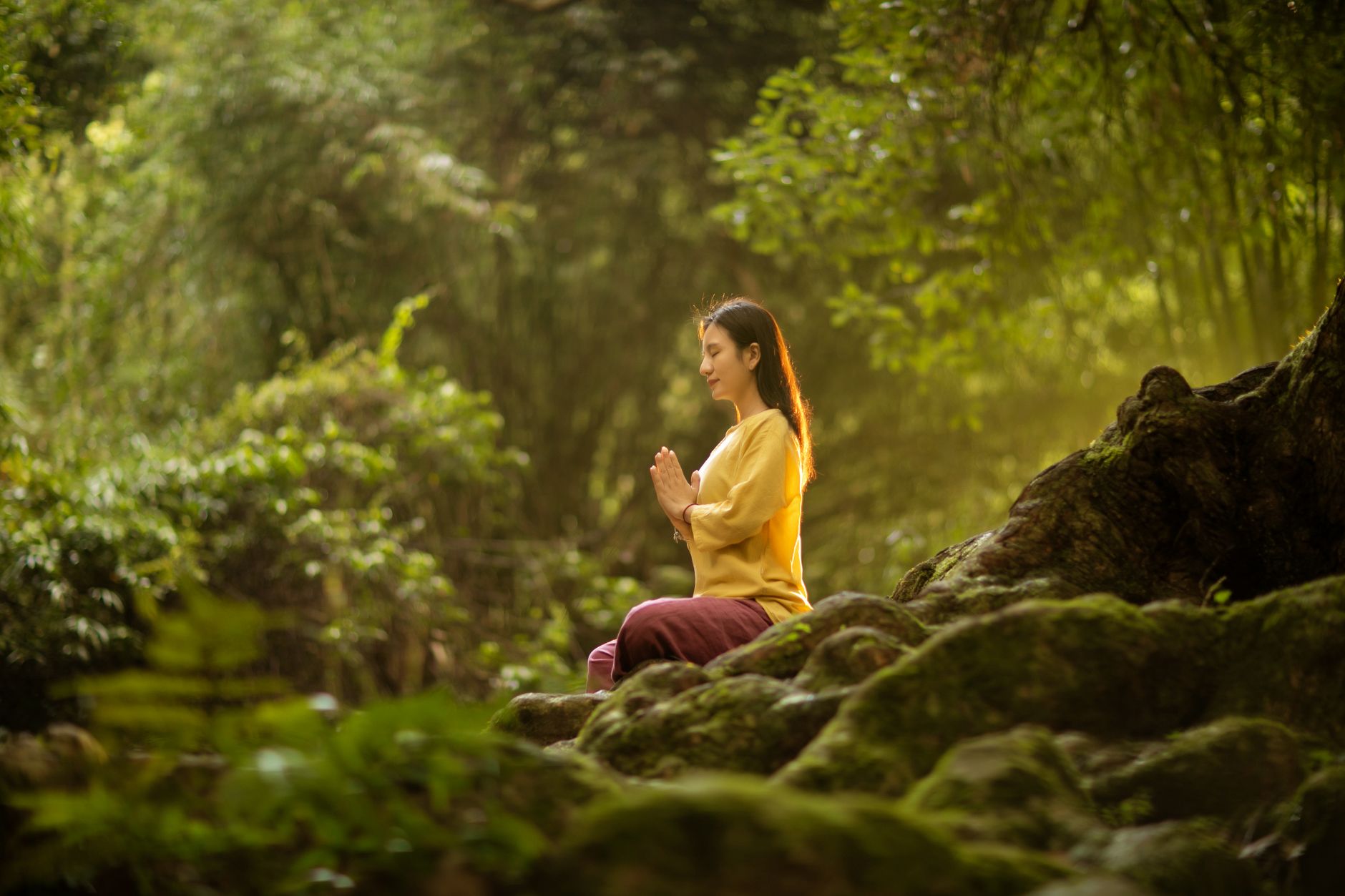
There is more. A 2015 study led by Paul Piff found that awe increases prosocial behavior — people who experienced awe were more generous, more cooperative, and less entitled. Participants who watched a video of vast natural scenes were more likely to help a stranger than those who watched neutral footage. Awe appears to shrink the ego without diminishing the person. It reframes problems as smaller against a larger backdrop.
Cortisol matters too. Research on forest bathing, pioneered in Japan as shinrin-yoku, shows measurable drops in cortisol after time in old-growth forests. The effect is not just relaxation; it is a physiological reset. Heart rate variability improves. Inflammatory markers decrease. The body registers awe as safety, not threat.
Here is the counter-intuitive part. You do not need a grand canyon or a once-in-a-lifetime eclipse. Awe is not about spectacle. It is about perceived vastness and the need to adjust your mental model. That means a quiet cathedral, a night sky unpolluted by city light, or a whale surfacing near your kayak can all trigger the same cascade. The trigger is subjective. The benefit is real.
So what does this mean for travel? It means the trip you choose can be designed for psychological repair, not just escape. And the science suggests the effects linger for weeks after you return home.
Destination Recommendations
Not every destination delivers awe reliably. The best ones combine scale, silence, and a sensory shift that pulls you out of routine. These three have strong evidence behind them — both from research and from my own clients’ reports.
1. The Atacama Desert, Chile. The driest place on Earth is also one of the clearest. At night, the Milky Way arches across the sky with a density you cannot see from any populated area. Observatories like ALMA and Paranal sit here for a reason. Clients describe the first ten minutes under that sky as disorienting, then humbling, then calming. The desert also strips away noise — no birds, no insects, almost no sound. That sensory emptiness amplifies the vastness above. Stay in San Pedro de Atacama. Go in the new moon window.
2. The Faroe Islands. Eighteen volcanic islands in the North Atlantic, often wrapped in fog and wind. The awe here is not dramatic in the postcard sense. It is the feeling of standing on a sea cliff while the ocean churns below and the wind pushes against your chest. The islands trigger what researchers call “the overview effect” — a shift in perspective that astronauts report seeing Earth from space. You do not need orbit. A cliff at Tjørnuvík at dusk does something similar. Go in late spring for the midnight sun.
3. The Redwood Forests of Northern California. Old-growth redwoods are among the tallest living things on the planet. Walking through a grove of trees that were saplings before the Roman Empire is a direct confrontation with deep time. The science on forest bathing is strongest here because the scale is undeniable. The trees also release phytoncides — airborne compounds that boost natural killer cells in the immune system. Stay in Mendocino or Humboldt County. Visit in early morning before the crowds.
What to Expect
The first day rarely delivers awe. That is important to know, because many travelers arrive expecting instant transcendence and then feel disappointed. Day one is usually logistics — airport, drive, check-in, the low-grade stress of being somewhere unfamiliar. Your brain is still running its usual loops. Give it time.
Day two often brings a shift. You sleep differently. The silence or the new sounds — wind, water, unfamiliar birds — start to override the mental replay of emails and schedules. You may notice your shoulders drop without deciding to relax them. This is the nervous system beginning to downshift.
By day three or four, awe tends to arrive. Not on schedule. Usually in an unplanned moment. A break in the clouds. A sudden view. The sound of a glacier calving in the distance. When it comes, it often feels like relief rather than excitement. Clients describe tears, laughter, or a quiet that feels bigger than words. The self-critical voice goes offline for a while. That is the default mode network quieting down.
The last days are for integration. You start to think about home differently. Problems that felt permanent seem more workable. You may feel a pull to change something — a job, a relationship pattern, a daily habit. That is the awe effect doing its work. It does not solve your life. It gives you a wider frame to see it.
Cost & Logistics
Wellness travel has a reputation for being expensive, and some of it is. But awe is not a luxury product. You can find it on a budget if you choose wisely.
- Budget range: $1,200–$2,500 per person for a 7–10 day trip to the Faroe Islands or Atacama (flights excluded or included depending on origin). Redwood road trips can be done for under $1,000 with camping or budget motels.
- Best timing: Shoulder seasons reduce crowds and cost. Faroe Islands in May or September. Atacama in April or October. Redwoods in March or November.
- Physical demand: Most awe-inducing sites require some walking, but not extreme fitness. Redwood groves have accessible trails. Faroe cliffs have moderate hikes. Atacama geysers sit at 4,300 meters — acclimatize first.
- Digital hygiene: Leave the phone in airplane mode for at least the first two hours of each awe encounter. Scrolling breaks the spell. Research shows divided attention reduces the emotional impact.
- Duration: Minimum four days on location. Less than that and you barely exit mental autopilot. Seven to ten days allows the full arc — stress, shift, awe, integration.
Book accommodations early for the Faroe Islands in summer. Atacama tours fill up around new moon dates. Redwood cabins go fast on weekends. Travel insurance is wise for all three, especially Atacama given the altitude.
FAQ
Do I need to travel far to experience awe?
No. A local planetarium, a tall cathedral, or a night sky outside city limits can work. Distance helps because it disrupts routine, but it is not the active ingredient.
How long do the psychological benefits last?
Studies show measurable effects for two to four weeks after an awe experience. Regular exposure — even short weekly encounters — seems to extend the benefit.
Can awe help with anxiety or depression?
It can support treatment, not replace it. Awe reduces rumination and increases perspective. If you are in active treatment, talk with your clinician before planning a trip as therapy.
You do not need a diagnosis to benefit from awe. You need a willingness to stand somewhere vast and let it be bigger than you. The research is clear: the feeling fades, but the shift in how you see yourself and your problems tends to stay. So where will you go to feel small in the best possible way?