
There is a particular kind of dread that settles in around seat 34B. The tray table is jammed. The person behind you has claimed your recline space with their knees, and the cabin pressure is doing something unpleasant to your sinuses. Most travel advice tells you to white-knuckle it until landing. I want to offer something different: the possibility that twenty minutes of meditation at 35,000 feet might be the most restorative part of your trip. Not because meditation is magic, and not because you need to achieve some transcendent state while a toddler kicks your seat. Because the research on mindfulness during travel is genuinely compelling, and because I have watched clients transform their relationship with flying using nothing more than attention and breath.
Last spring, a client named Mira told me she hadn’t visited her sister in four years. The flight was three hours. She could handle three hours, she said, except she couldn’t. Her chest tightened at the gate. Her hands went numb during takeoff. On her first attempt at a meditative flight, she didn’t reach enlightenment. She reached a sort of neutral calm somewhere over Ohio. When she landed, she called me from the airport Starbucks, laughing. “I didn’t love it,” she said. “But I didn’t hate it either.” That was enough to get her on the plane again.
The Science
What actually happens when you meditate on a plane? The physiology is more interesting than the poetry. At altitude, your body is already under mild stress: lower oxygen saturation, dry air, circadian disruption if you’re crossing time zones. Meditation doesn’t erase those conditions. It changes your relationship to them.
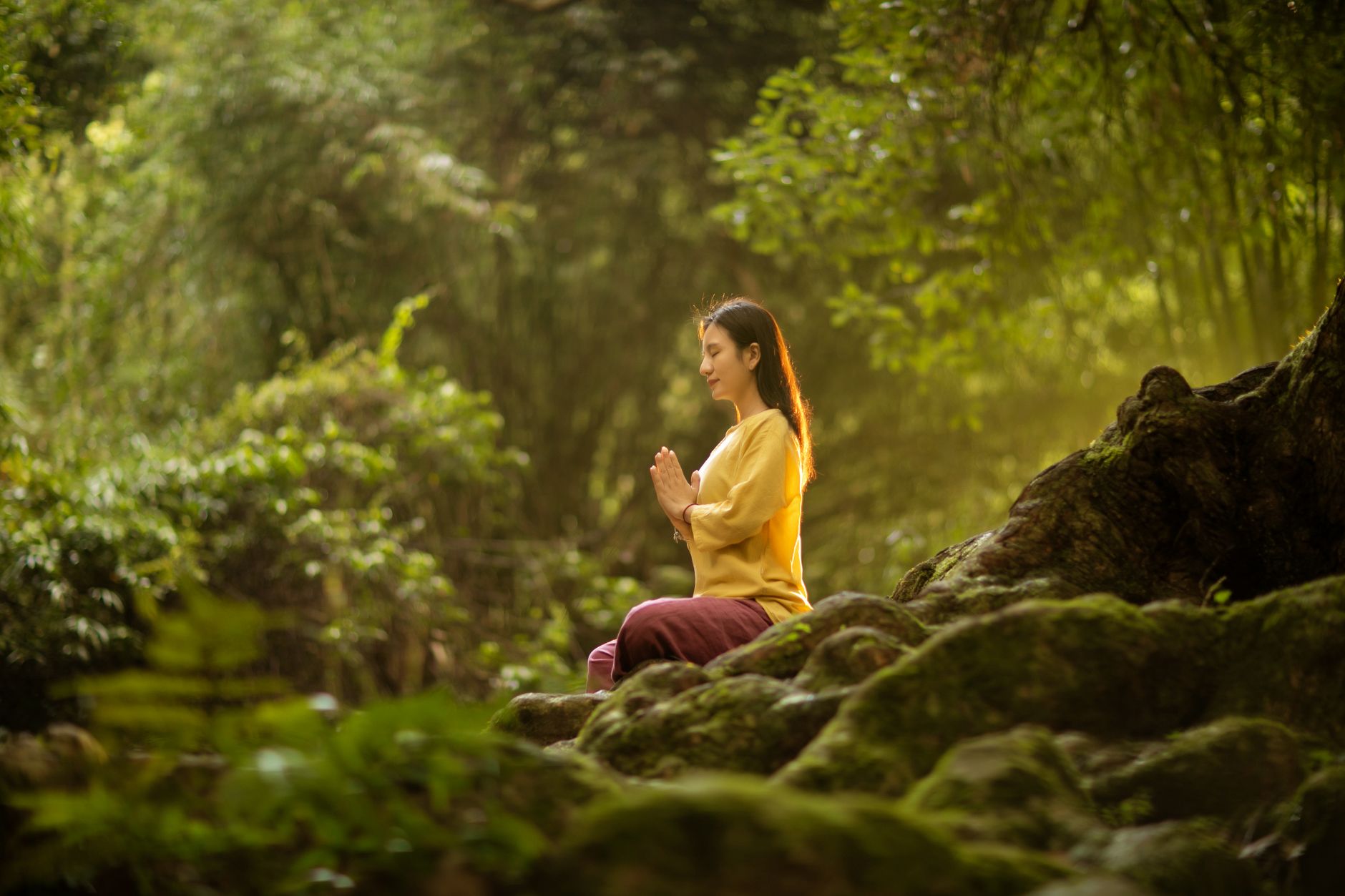
A 2019 study in Frontiers in Psychology found that brief mindfulness interventions—as short as ten minutes—reduced state anxiety in air travelers, with effects measurable through both self-report and heart rate variability. The vagus nerve, which governs your parasympathetic “rest and digest” response, becomes more active. Your cortisol curve flattens. You are not imagining the calm; you are building it, neuron by neuron.
The counter-intuitive part is this: trying to relax often backfires. The psychologist Daniel Wegner documented what he called “ironic process theory”—the more you try to suppress a thought, the more it intrudes. So the instruction “don’t think about turbulence” is worse than useless. Meditation works differently. You don’t suppress the anxious thought. You notice it, label it, and return to your breath. The thought loses its grip not through force but through disinterest.
There is also something specific about the airplane environment that helps. The white noise of the engines is a steady, low-frequency hum—remarkably similar to the sound used in some sound-masking meditation recordings. The enforced stillness of being in your seat removes the option to fidget. You cannot scroll your way out of this. The container itself becomes the practice.
One more piece of research deserves mention. A 2021 paper in the Journal of Travel Medicine found that travelers who practiced any form of contemplative exercise before and during flights reported lower rates of jet lag and better sleep quality on arrival. The mechanism is likely circadian: meditation doesn’t reset your clock, but it does reduce the cognitive arousal that makes it hard to rest when your body is confused about time.
Does this mean meditation is a cure for flight anxiety? No. If you have a clinical phobia, please talk to a professional before your next trip. But for the ordinary restlessness, dread, and boredom of air travel, the evidence says it helps.
Destination Recommendations
You can meditate on any plane, but some routes and destinations make the practice easier—and the payoff richer. Here are three I return to often, both in my own travel and with clients.
Kyoto, Japan (arriving via Kansai International). The flight from most North American hubs is long—ten to twelve hours—which sounds like a drawback until you reframe it as a built-in meditation retreat. Japanese airlines often have quiet cabins and attentive service that respects rest. Once you land, Kyoto itself is a city designed for contemplative practice. The Philosopher’s Path, a two-kilometer canal-side walk lined with cherry trees, is one of the most meditative urban walks on earth. I recommend a morning arrival, a slow train into the city, and a first-day practice of walking meditation at Nanzen-ji temple. The adjustment to Japan time is brutal; the mindfulness you practiced on the plane will soften it.
Reykjavík, Iceland (via Keflavík). The flight from the East Coast is only five to six hours, which makes it an ideal first experiment in airborne meditation. Short enough that you can’t talk yourself out of it, long enough to feel the shift. Iceland itself is a masterclass in spaciousness—volcanic landscapes, geothermal pools, a sky that never quite darkens in summer. The Blue Lagoon is touristy, yes, but the Sky Lagoon south of the city offers a quieter geothermal bathing experience with a seven-step ritual that includes a cold plunge and a sauna with an ocean view. Floating in warm water after a meditative flight is a kind of reset your nervous system will remember.
The Blue Ridge Mountains, North Carolina (via Asheville). For readers in the United States who want a domestic option, this is my quiet recommendation. Flights into Asheville are short, and the surrounding mountains are home to a surprising number of meditation and yoga retreat centers. The Art of Living Retreat Center in Boone offers weekend programs specifically designed for travelers and burnout recovery. The drive from the airport to the mountains takes about an hour. The altitude is mild. The silence is profound. I have sent several clients here after difficult years, and the reports back are consistently good.

What to Expect
Let me be honest about the experience, because wellness travel writing often skips this part. Day one of meditating on a plane is awkward. You will feel self-conscious. You may worry that the person next to you is watching. You will notice every sound: the drink cart, the seatbelt sign, the baby two rows back. Your mind will produce an endless stream of commentary. This is not failure. This is the practice.
Day two—if you’re on a longer trip and repeat the practice—feels different. The awkwardness fades. You begin to find a rhythm. The breath becomes a place you can return to, like a familiar room. You may not feel blissful. You will likely feel slightly more settled than you did on day one. That is the realistic goal.
Day three and beyond, something shifts. Not dramatically. You notice that the turbulence bothers you less. You notice that you can sleep for twenty minutes and wake up without the usual disorientation. You notice that the person beside you is less irritating than they were. The practice is working quietly, in the background, the way a muscle strengthens.
What you should not expect: a transcendent experience. An end to all anxiety. A guarantee that you will love flying. Meditation is not a performance. It is a relationship you are building with your own attention. Some flights will feel easy. Some will feel hard. Both are data.
Cost & Logistics
The good news: meditating on a plane costs nothing. The bad news: the trip itself does not. Here are realistic ranges.
- Flights: Domestic U.S. round trips to Asheville run $200–$500 depending on season. Transatlantic to Reykjavík: $400–$900. To Kyoto from North America: $800–$1,600.
- Accommodation: Budget $80–$150 per night for a simple guesthouse or hostel. Mid-range hotels and ryokan in Kyoto: $150–$350. Retreat centers in the Blue Ridge: $200–$400 per night including meals.
- Apps and resources: Insight Timer is free and has thousands of guided meditations. Headspace and Calm are $70–$100 per year. A good noise-canceling headphone set (Sony or Bose) runs $250–$400 and is, in my view, the single best investment for airborne practice.
- Timing: Book flights for mid-week departures when cabins are quieter. Morning flights tend to have fewer delays. If you’re crossing time zones, arrive in the late afternoon and force yourself to stay awake until local bedtime.
One practical note: aisle seats make it easier to get up and stretch, but window seats give you a wall to lean against and fewer distractions. I prefer the window for meditation. Choose based on your own temperament.
Frequently Asked Questions
Is it weird to meditate on a plane?
No. With your eyes closed and headphones on, you look like every other passenger trying to sleep. No one is watching you.
How long should I meditate during a flight?
Start with ten minutes. If that feels manageable, extend to twenty. Longer flights can support two or three short sessions rather than one long one.
What if I can’t stop my thoughts?
You can’t, and you don’t need to. The practice is noticing the thoughts and returning to your breath. The returning is the meditation.
Takeaway
The plane is not the obstacle to your wellness. It is the opportunity. You are already strapped into a seat with nothing to do and nowhere to go—a situation most of us spend our lives trying to avoid. Meditation turns that enforced stillness into a gift. You don’t need perfect conditions. You don’t need silence. You don’t need to feel calm before you begin. You need ten minutes, your own breath, and the willingness to try something that might feel a little strange at first. The next time you fly, close your eyes at altitude. See what happens.