
travel/”>Healing doesn’t arrive in a neat package. It rarely announces itself. But there are places on this earth — specific, physical places with particular light and air and rhythm — where the nervous system seems to remember something it forgot. I’ve spent fifteen years walking beside people in therapy rooms, and another decade travelling to places that seemed to hold answers. What I’ve learned is that the right landscape, at the right moment, can do work that conversation alone sometimes cannot. This is a guide to the retreats and regions that, in my clinical and personal experience, offer genuine restoration — not the glossy kind, but the kind that changes how you sleep.
I remember a client — call her Marta — who came to me after a year of insomnia and a grief she couldn’t name. Six sessions in, she booked a week at a mountain monastery in the Austrian Alps, mostly to escape her phone. She sent me one message from there: “I slept nine hours. I don’t know why.” She came home quieter. Something in the thin air and the bells and the utter absence of urgency had let her body stop bracing. That’s the thing about healing places. They don’t fix you. They give your system permission to stop defending itself.
The Science
The research here is more substantial than sceptics assume. Attention Restoration Theory, developed by environmental psychologists Rachel and Stephen Kaplan, proposes that natural environments restore directed attention by offering “soft fascination” — leaves moving, water shifting, light changing — that engages the mind gently without demanding focus. Urban environments, by contrast, tax our attention with constant novelty and threat detection. This isn’t metaphor. It’s measurable cognitive load.

Then there’s the Japanese research on shinrin-yoku, forest bathing, which has shown reductions in salivary cortisol and blood pressure after time among trees. The mechanisms include phytoncides — airborne compounds released by trees — and the simple fact of slowed pace. A 2019 review in Environmental Research linked green space exposure to lower rates of depression and anxiety across large populations. And the polyvagal work of Stephen Porges gives us a physiological frame: safety cues in the environment — warmth, stillness, familiar rhythm — help the vagus nerve shift us out of fight-or-flight and into social engagement and rest.
Here’s a counter-intuitive opinion, and I’ll hold to it: the most healing retreats are not the ones that offer the most. The retreat that promises yoga at dawn, breathwork at noon, and a gong bath at dusk can become its own form of busyness — a schedule to keep, a performance of wellness. The places that restore people most reliably tend to be slightly boring. Understimulating. Empty in the best sense. We are not good at choosing that. Our culture equates healing with doing. The nervous system equates it with stopping.
So what should you look for? Not luxury, necessarily. Not a particular method. Look for places where the pace is set by something other than you — the tide, the light, the bells, the seasons. The environment does the work. You just have to stop interfering.
Destination Recommendations
The Austrian Alps — Bad Gastein and the high valleys. I return here because it works. Bad Gastein sits in a narrow valley with a waterfall thundering through its centre and radon thermal springs that have drawn European bathers for centuries. The air is thin and clean, and the walking is gentle enough for a tired body. What I recommend to clients is not the grand hotels but the small pensions in the side valleys — Hüttschlag, Böckstein — where you can walk for two hours and see three people. The mountain silence is specific. It has texture. Sleep comes easily at altitude, and the light in late afternoon turns the peaks gold. Spend seven nights minimum. Walk every morning before breakfast. That’s the whole protocol.
Ubud, Bali — with a caveat. Yes, it’s crowded with seekers. Yes, the traffic is real. But the healing infrastructure here is genuine, and if you choose carefully — a small family-run guesthouse on the edge of the rice terraces rather than a resort — the place still holds something. The daily rhythm of offerings, the sound of gamelan drifting at dusk, the wet green smell after rain. I’ve seen clients do remarkable grief work here with Balinese healers who have practised for generations. Choose the outskirts. Walk the rice field paths at dawn. Avoid the centre after ten in the morning. The land still works if you let it.
The west coast of Ireland — Connemara and Achill Island. This is my sleeper recommendation. The weather is unreliable and that’s the point. Connemara’s bogland and stone walls and enormous sky create a kind of spaciousness that asks nothing of you. There are no wellness resorts here, not really — just guesthouses and the Atlantic. The sea air, the long walks, the turf fires in the evening. Research on “blue space” — coastal environments — shows measurable mood benefits, and the sheer scale of the landscape seems to shrink rumination. Go in September. Bring waterproofs. Walk the beaches at low tide. Sit still for longer than feels comfortable. Something loosens.
What to Expect
Day one, you’ll be restless. This is normal and worth naming. The mind, deprived of its usual tasks, will generate urgency. You’ll check your phone. You’ll wonder if you’ve chosen wrong. Sit with it.
Day two or three, the restlessness starts to thin. You’ll sleep more than usual. You may feel unexpectedly emotional — grief or anger surfacing without obvious cause. This is the nervous system exhaling. Let it come. Don’t try to process it. Just walk, eat, sleep.
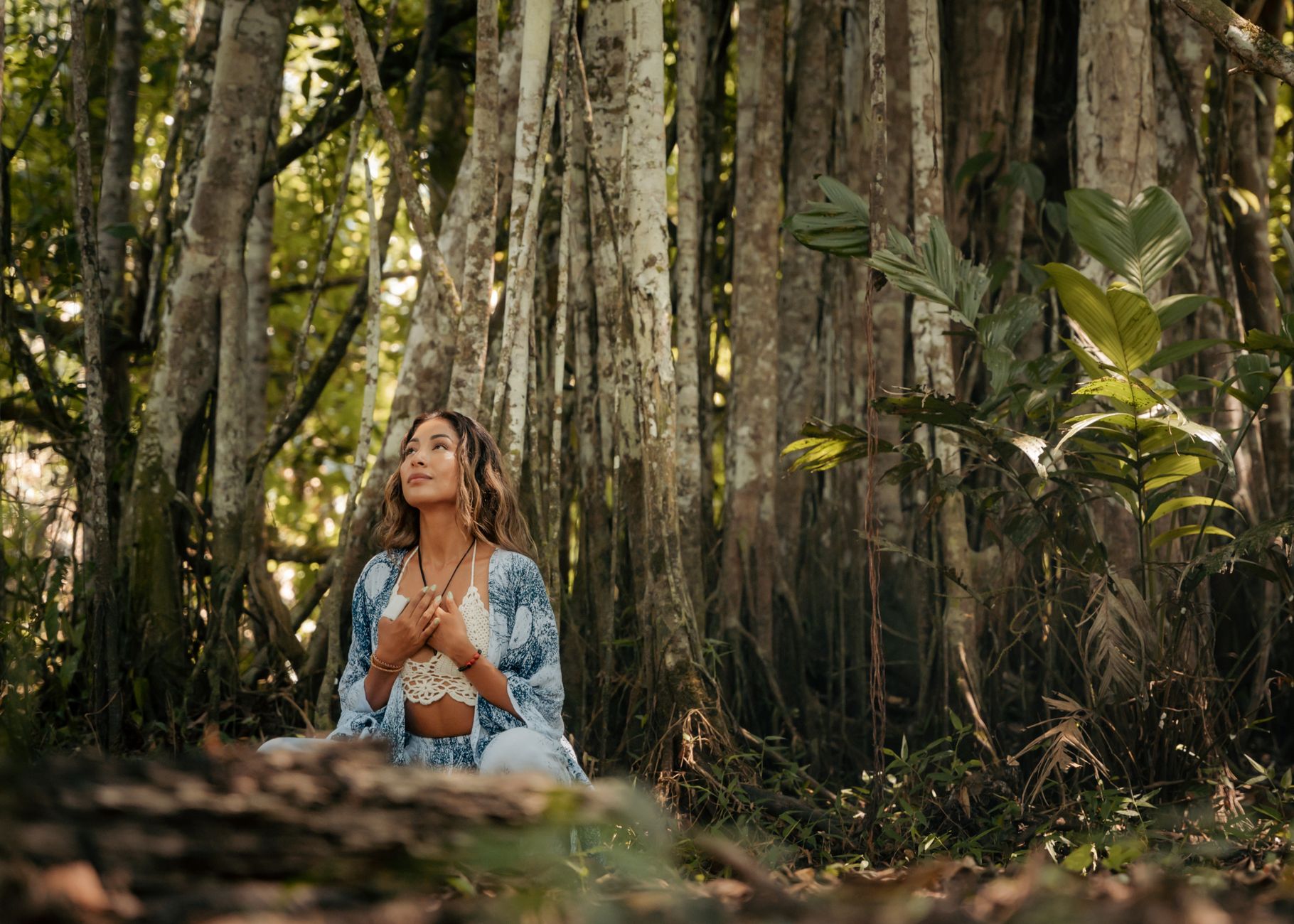
By the middle of the week, something settles. Meals taste better. You notice small things — the sound of a stream, the particular quality of morning light. Your thoughts slow and lose their urgent edge. You may find yourself sitting on a bench for forty minutes doing nothing and feeling no guilt. This is the state we’re after.
The last days bring a gentle sadness, sometimes anxiety about returning. That’s fine too. The point isn’t to stay forever. It’s to remember that this state is available to you — that your body knows how to do this, and will do it again if you give it the conditions.
What you probably won’t get: a dramatic breakthrough. A single moment of transformation. Real healing tends to be cumulative and undramatic. The changes show up later, at home, in how you handle a difficult email or a sleepless night. That’s the measure.
Cost & Logistics
Budget varies enormously by destination. In the Austrian Alps, a small pension runs €60–90 per night with breakfast; a week with modest meals and train travel from a major city lands around €800–1,200 total. Bali is cheaper on the ground — guesthouses from $30–60 per night, meals a few dollars — but flights from Europe or North America are the real cost, often $800–1,400 return. Ireland sits in the middle: guesthouses €70–110 per night, car hire essential for Connemara, total budget around €1,000–1,400 for a week excluding flights.
Practicalities matter more than people think. Book at least two months ahead for the high season. Travel alone if you can — the solitude is part of the medicine, though a trusted companion works too. Bring a paper notebook. Leave the laptop. Tell someone where you are and then go quiet. And build in a buffer day at home before returning to work; the transition is where people lose the gains.
- Choose a place where the environment sets the pace — tide, light, bells, seasons — rather than a packed activity schedule.
- Aim for seven nights minimum; the nervous system needs several days just to stop bracing.
- Prioritise understimulation over enrichment; slightly boring places heal best.
- Walk every morning before breakfast — gentle, unhurried, without a destination.
- Leave the laptop, keep a paper notebook, and build in a buffer day before returning to work.
Frequently Asked Questions
How long does a healing retreat need to be to have an effect?
Seven nights is the practical minimum. Research on stress recovery suggests the first two or three days are mostly decompression. The deeper restoration happens in the second half of the week. Ten days is better if you can manage it.
Is it better to go alone or with a partner?
Alone is more effective for most people, because solitude removes the social performance that keeps the nervous system slightly on guard. That said, a calm and undemanding companion is far better than going alone with anxiety about going alone. Know yourself.
Do I need to book a structured programme with therapists and workshops?
Not necessarily, and often not at all. Structured programmes suit some people, particularly in acute distress. But for general restoration, the evidence favours unstructured time in restorative environments. The land is the therapist. Your job is to show up and stop managing.
Here’s what I’ve come to believe after years of both therapy rooms and long walks in unfamiliar landscapes: healing is not something you achieve. It’s something you allow. The places I’ve described are not magic. They’re simply environments where the conditions for restoration are easier to find than in your ordinary life. The mountain doesn’t heal you. The sea doesn’t fix you. But they quiet the noise long enough for your own system to do what it already knows how to do. So choose a place. Go for a week. Walk in the morning. Sleep when you’re tired. And when the restlessness comes — because it will — sit with it and let the landscape do its slow, unglamorous work. Your body has been waiting for permission. Give it.