
Airport anxiety ambushes even the most seasoned traveller. You’re fine in the taxi. Fine in the check-in queue. Then the departure board flickers, the tannoy crackles, and your chest tightens like a seatbelt locking on a sharp bend. If that sounds familiar, you’re in good company — and you’re not broken. Airports are, by design, environments that press hard on the human nervous system: crowds, noise, time pressure, confinement, and a loss of control all at once. Psychology has a great deal to say about how to move through them with more ease. I’ve spent years blending clinical practice with travel-therapy-for-anxiety-how-journeys-calm-the-mind/”>travel-reduces-anxiety-over-time/”>travel, and I’ve watched anxious flyers transform their experience — not by “calming down” but by understanding what their body is actually doing.
Maya stood at security with her boarding pass trembling between two fingers, convinced she was about to be stopped, questioned, or worse. Nothing was wrong. Her flight was on time. Her bag was packed. But her heart was hammering and her thoughts had sprinted ahead to every possible disaster. I asked her one question: “What is happening right now, in this exact minute?” She blinked. “I’m standing in a queue.” That small pivot — from imagined catastrophe to present fact — is where airport anxiety begins to loosen its grip.
The Science
Anxiety at airports is largely a story of prediction. Your brain, doing its job, scans the environment for threat and finds plenty of ambiguous material: strangers moving fast, announcements you half-hear, a body scanner that feels intrusive, a departure gate that might change. When the threat is uncertain, the amygdala errs on the side of caution. It fires first and asks questions later. That’s why your palms sweat before you’ve even reached the security tray.
Research on anticipatory anxiety shows the waiting is often worse than the event. Studies of public speaking and medical procedures consistently find that people overestimate how distressing an experience will be and underestimate their ability to cope with it. Flying is no different. The hours before boarding frequently carry more physiological arousal than the flight itself.
There’s also the matter of control. Psychologists have long known that a sense of agency buffers stress. Airports strip agency in a hundred small ways — you can’t control the queue, the delay, the seat assignment, the person behind you. Restoring even tiny pockets of control, from choosing your route through the terminal to packing a specific comfort item, measurably lowers distress.
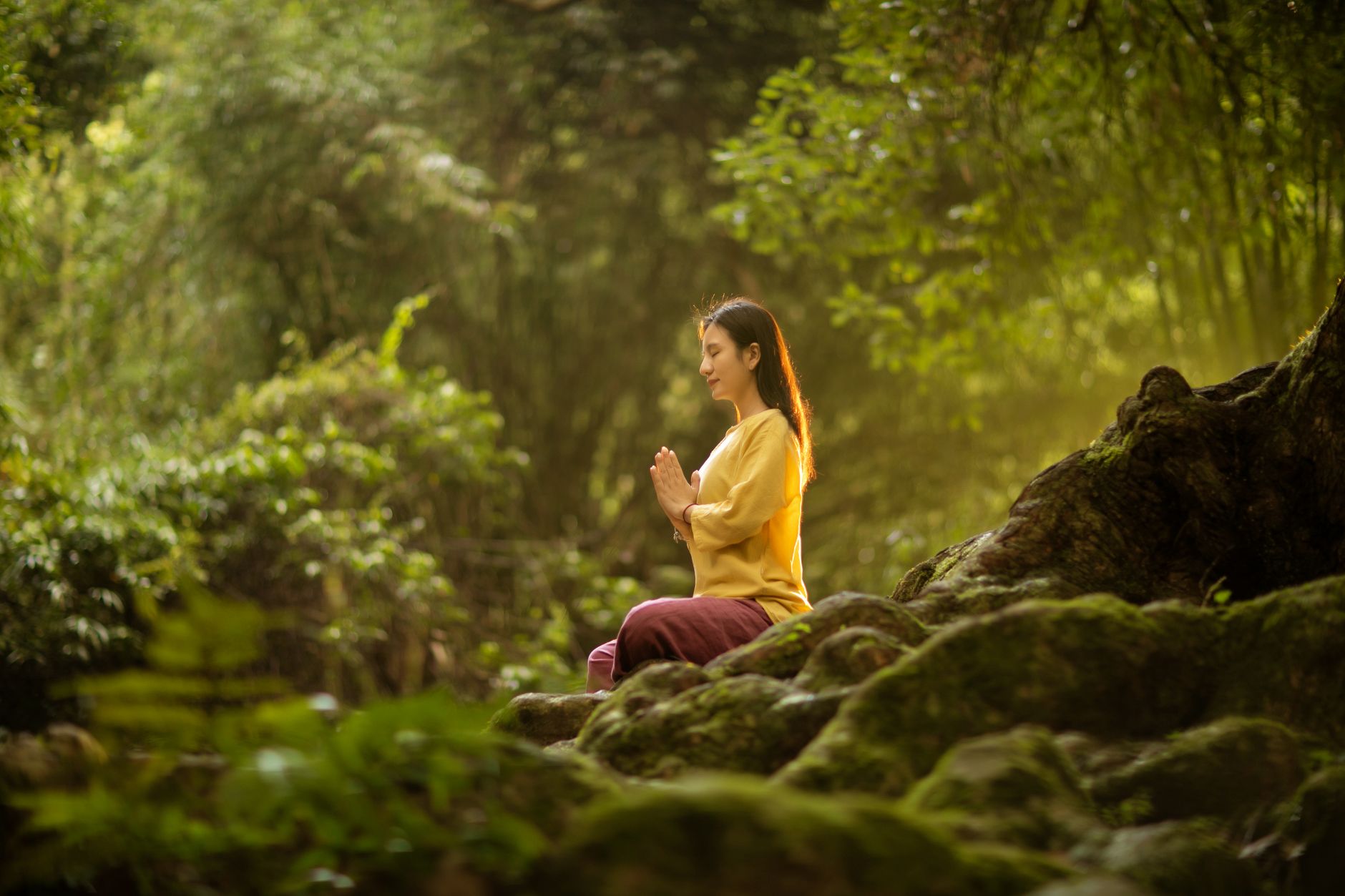
Breathing is the most portable lever you have. Slow, extended exhales stimulate the vagus nerve and shift the autonomic nervous system toward parasympathetic dominance. A practical version: inhale through the nose for four counts, exhale for six or eight. The long exhale matters more than the inhale. Do it for two minutes and you’re not “cured,” but you’ve told your body something true — that the emergency is not happening.
Here’s a counter-intuitive opinion I’ve come to hold firmly: distraction is underrated, and mindfulness is oversold in acute moments. Telling a panicking traveller to “sit with the feeling” at a crowded gate can backfire. Sometimes the wiser move is a crossword, a podcast, a phone call with someone who makes you laugh. Presence is a skill for the long term. Getting onto the plane is the short-term goal. Use what works.
Destination Recommendations
Therapy for travel anxiety doesn’t only happen in a consulting room. Some places are quietly built to regulate the nervous system, and a few are worth seeking out before or after a flight.
Singapore Changi Airport, Singapore. Changi is the closest thing aviation has to a spa. The Butterfly Garden in Terminal 3, the rooftop cactus garden, and the quiet zones with reclining seats give anxious travellers genuine escape routes from the terminal’s sensory overload. The Enchanted Garden and the various green spaces are free, open to all passengers, and almost absurdly calming. If you have a long layover, this is a place to practise grounding rather than endure it.
Keflavík Airport and the Blue Lagoon, Iceland. Reykjavík’s gateway airport is compact and low-friction, and the Blue Lagoon sits about twenty minutes away. A pre-flight soak in geothermal water is not a gimmick — warm water immersion has documented effects on muscle tension and mood. For travellers whose anxiety spikes around departure, arriving early and building in a decompression window before the airport changes the whole rhythm of the day.
Helsinki Airport, Finland. Helsinki has leaned hard into calm design: soft lighting, quiet seating areas, and a genuinely peaceful long-stay lounge. Finland’s broader culture of sisu and its relationship with nature translates into an airport that feels less like a shopping mall and more like a library. For anyone who finds crowds overwhelming, the quieter corners here are a real refuge.

What to Expect
Day one is usually the hardest, and it’s rarely the flight that does it. It’s the night before — the packing, the checking of documents three times, the 3 a.m. wake-up with a racing mind. Expect that. It doesn’t mean anything is going wrong. It means your threat system is doing a rehearsal.
At the airport, anxiety tends to arrive in waves rather than a constant hum. There’s often a spike at check-in, a dip once you’re through, a second spike at security, and a strange calm at the gate. Knowing the wave pattern helps. You can plan for the peaks instead of being ambushed by them.
The flight itself frequently surprises anxious travellers by being easier than the anticipation. Many people report that once seated and airborne, the helplessness actually becomes relief — there’s nothing left to manage. The work is mostly done before the wheels leave the ground.
Day two and beyond, if you’re travelling for wellness, you may notice residual vigilance: checking the time, scanning for problems, sleeping lightly. That’s normal and it fades. Give yourself a full day to land, literally and psychologically.
Cost & Logistics
You don’t need a fortune to travel with less anxiety, but a few deliberate spends pay off disproportionately. Airport lounges are the single best investment for nervous flyers. Day passes typically run from 25 to 60 euros or dollars depending on the airport, and they buy you quiet, seating, food, and a sense of control that is hard to put a price on. For frequent flyers, a mid-tier lounge membership often costs less than two airport meals per trip.
Budget ranges vary widely. A calm, well-planned short-haul trip within Europe might cost 400 to 900 euros including flights, accommodation, and a lounge pass. A longer wellness-oriented journey — say Iceland with a lagoon visit — can run 1,200 to 2,500 euros for a week, depending on season. Booking early, travelling midweek, and choosing airports with reputations for calm design all reduce both cost and stress.
Logistics matter more than most people admit. Arrive earlier than you think you need to — not so early that you sit and stew, but with a buffer that removes the sprint. Download your airline’s app so gate changes reach you before the tannoy. Request a seat away from the galley and toilets if noise bothers you. And pack a small “regulation kit”: headphones, a familiar scent, a grounding object, water.
- Build in a buffer of 45 to 60 minutes beyond your usual arrival time to remove time pressure.
- Book a lounge day pass — quiet space is the most effective anti-anxiety purchase at any airport.
- Use the 4-6 breathing pattern during queues and at the gate; the long exhale does the work.
- Choose airports known for calm design and quiet zones when you have the option.
- Keep a small comfort kit on you, not in the hold: headphones, water, a familiar scent, something to hold.
Frequently Asked Questions
Is airport anxiety a real condition?
It isn’t a diagnosis on its own, but it’s a very common manifestation of anticipatory anxiety and, for some people, a specific phobia. If it’s interfering with your life, it’s worth talking to a professional.
Should I take medication before flying?
That’s a conversation for your doctor, not a general article. Some people benefit from short-term options; others do better with behavioural strategies. Never self-prescribe for the first time on travel day.
What’s the fastest way to calm down at security?
Slow your exhale, name five things you can see, and remind yourself that the process has a defined end. You are not being evaluated. You are moving through a system.
Airport anxiety is not a character flaw and it isn’t something you have to white-knuckle your way through forever. It’s a predictable response to an unpredictable environment, and predictable things can be worked with. Start with one small change — a longer exhale, a lounge pass, an earlier arrival. Notice what shifts. The goal isn’t to feel nothing at the gate. It’s to feel enough of your own steadiness to walk onto the plane. And here’s the question worth sitting with: what would you do with the trip if the airport stopped being the hardest part?