
Your nervous system doesn’t know you’re on vacation. I’ve watched this play out in clients who book a trip expecting instant calm, then spend the first three days checking email from a cabin deck. Scandinavia figured out something the rest of us are still catching up on. The forest isn’t a backdrop for recovery. It’s the mechanism. Across Sweden, Finland, Norway, and Denmark, forest therapy isn’t a wellness trend with branded merch — it’s a public health assumption, baked into how people live, work, and build cities. And the research coming out of Nordic universities is quietly reshaping what therapists like me recommend when someone tells me they can’t slow down.
I met a woman from Hamburg on a trail outside Jyväskylä last autumn. She’d flown in after a burnout diagnosis, skeptical, arms crossed. Twenty minutes into a guided walk — no talking, no destination — she started crying. Not dramatically. Just quietly, the way you cry when something you’ve been holding finally gets permission to loosen. “I didn’t know I was allowed to do nothing,” she said afterward. That sentence has stayed with me for two years.
The Science
Forest therapy — shinrin-yoku in Japanese, skogsbad in Swedish, metsäkylpy in Finnish — has accumulated a genuinely serious evidence base over the past two decades. The most cited work comes from Japan, but Nordic researchers have added their own layer. The findings converge on something specific rather than vague.
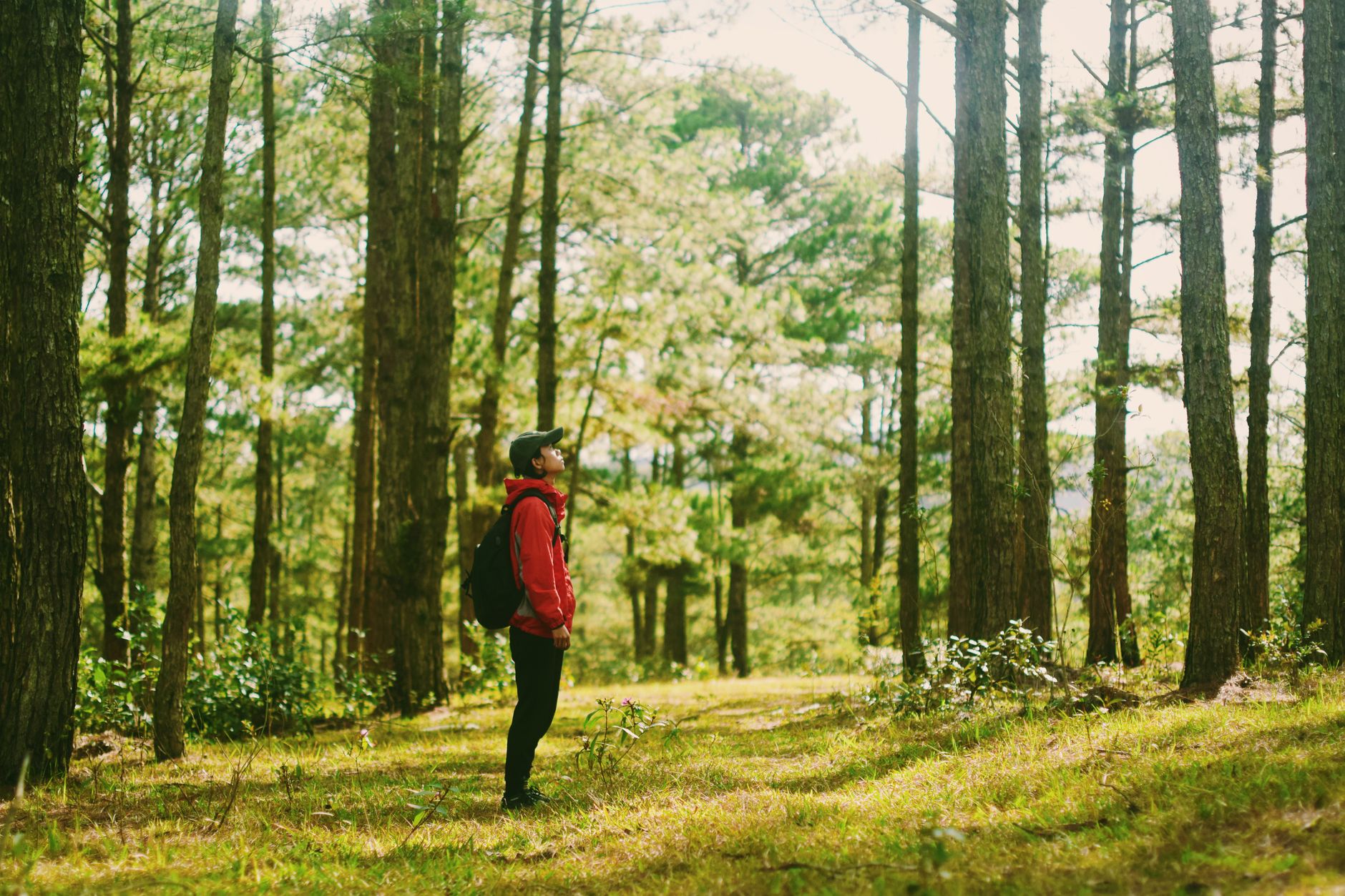
Phytoncides, the volatile organic compounds trees release, appear to do measurable things to human physiology. Studies from Nippon Medical School found that participants who spent three days in forest environments showed increased natural killer cell activity — part of your immune response — and that the effect persisted for up to a week afterward. You can’t get that from a diffuser. The compounds have to come from living trees, and you have to breathe them.
Cortisol drops. Heart rate variability improves. Blood pressure lowers, sometimes within fifteen minutes of entering a forest. A 2019 meta-analysis in Environmental Research pooled data from dozens of studies and found consistent reductions in cortisol and improvements in mood among forest-bathing participants compared to urban controls.
Here’s the counterintuitive part, and it’s the one I repeat most often in session: the benefit isn’t primarily about relaxation. It’s about attention restoration. Your directed attention — the kind you use to filter email, resist distractions, make decisions — is a finite resource. Urban environments tax it constantly. Natural environments engage what psychologists call “soft fascination”: leaves moving, light shifting, water sounds. Soft fascination lets directed attention recover without demanding effort. That’s why you feel genuinely restored after a forest walk in a way you don’t after scrolling on a beach chair.
Stephen Kaplan’s attention restoration theory has held up remarkably well. What’s newer is the finding that the dose matters less than the consistency. Twenty minutes several times a week beats a single three-hour hike. Nordic countries have structured their public health guidance around this — Finland’s national recommendations explicitly encourage short, frequent nature exposure rather than occasional big outings.
And then there’s the social dimension, which gets overlooked. Forest therapy in Scandinavia is often done in silence, together. No small talk. No performance. For people whose anxiety is social rather than environmental, that’s a specific kind of relief — connection without the cost of conversation.
Destination Recommendations
Nuuksio National Park, Finland. Forty minutes from Helsinki by bus, which makes it unusually accessible for a national park. The Finnish Forest Therapy Association runs guided walks here, and the terrain is gentle — mossy spruce forest, small lakes, well-marked trails. The Haltia Nature Centre serves as an orientation point and has excellent information on the health research. Best for first-timers who want structure without remoteness.
Skuleskogen National Park, Sweden (High Coast). This is the one I send people to when they need scale. Ancient forest meeting a dramatic Baltic coastline, with trails ranging from two hours to multi-day. The High Coast is a UNESCO site, and the forest here is old-growth in places — the phytoncide concentrations are noticeably higher than in managed woodland. Stay in the nearby village of Docksta. Go in late August, when the light is long and the crowds have thinned.
Nordmarka, Norway. The forest that surrounds Oslo — reachable by metro, which still astonishes me. Over 1,700 kilometers of trails. Norwegians use it constantly and unceremoniously, which is part of its therapeutic value: you’re not doing a wellness activity, you’re just in the forest like everyone else. The friluftsliv culture here normalizes time outdoors in a way that removes the self-consciousness many visitors carry.
What to Expect
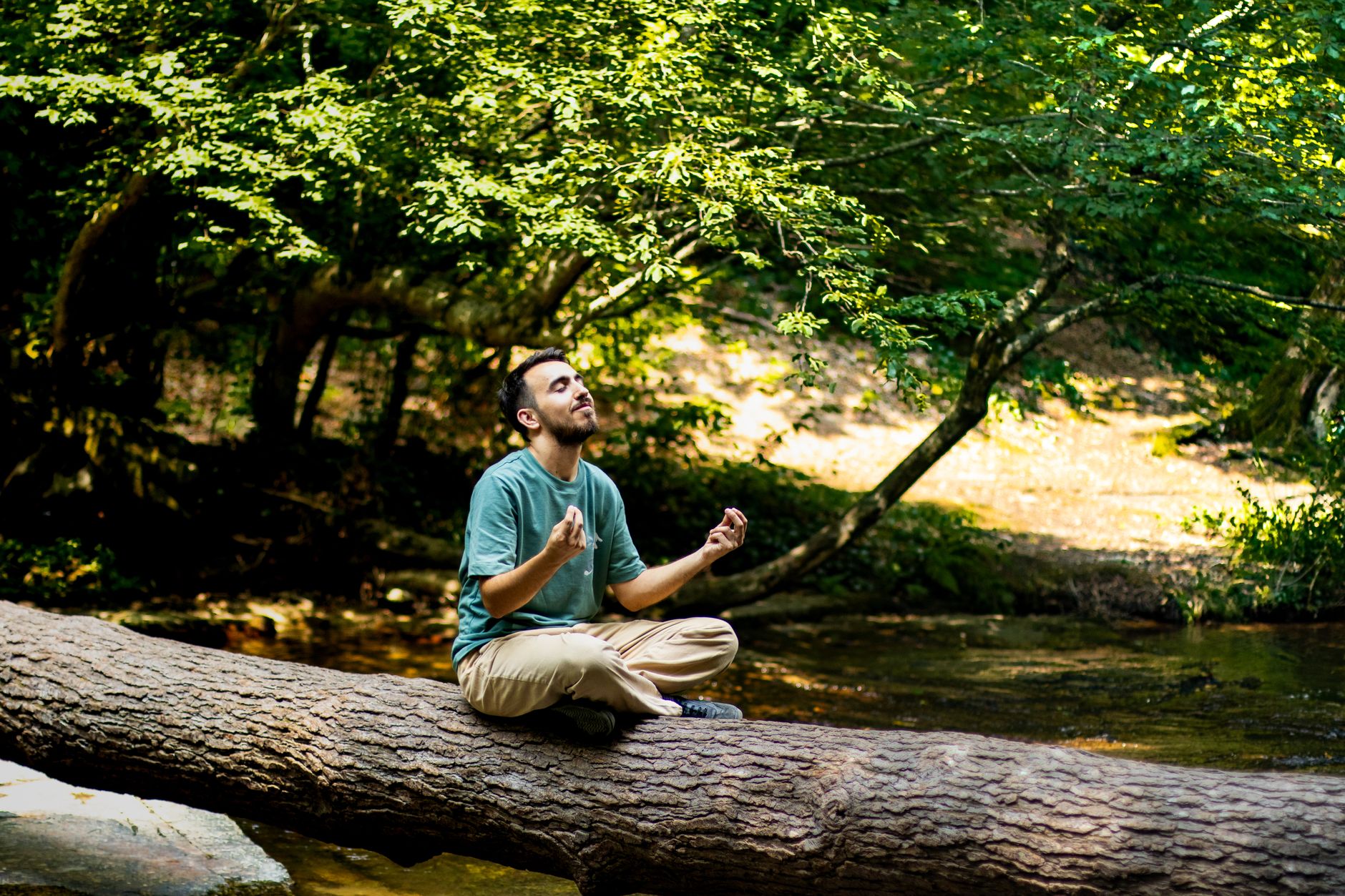
Day one is usually restless. I won’t pretend otherwise. Your phone has signal in most of these places, and the pull to check it is real. Guided forest therapy sessions typically start with a slow sensory exercise — noticing what you can hear, then what you can feel, then what you can smell. It feels awkward for about ten minutes. Then it doesn’t.
By day two, something shifts in how you walk. Slower. Less destination-focused. You start noticing the specific texture of moss, the way light moves through birch canopy. This isn’t romanticism — it’s your attention system switching modes.
Day three is often when people report the emotional release I described earlier. Not because forests are magic, but because you’ve finally created enough nervous system space for something to surface. A good guide knows how to hold that without making it a big deal.
Days four and five tend to be quieter, more integrated. You sleep better. You eat more slowly. The forest stops being an event and starts being a place you’re simply in.
- Bring layers — Nordic forest weather changes fast, even in summer
- Guided sessions run 2–3 hours; solo forest bathing can be as short as 20 minutes
- Silence is part of the practice, not a rule to enforce on yourself
- Mosquito repellent is not optional in July, especially in Finland
- Leave the podcast at home for at least the first two days
Cost & Logistics
Guided forest therapy sessions in Scandinavia typically run €40–90 per person for a half-day walk. Multi-day retreats with accommodation and meals range from €600 to €2,500 depending on country and level of luxury. Finland is generally the most affordable; Norway the most expensive.
You don’t need a guide to benefit. National park access is free in all four countries, and public transport reaches most of the destinations I’ve mentioned. A week in a cabin outside Jyväskylä or in the Norwegian forest can cost less than a long weekend in Copenhagen. Flights from major European cities to Helsinki or Oslo are frequently under €150 return if booked a few weeks out.
Best seasons: late May through early September for warmth and light. September and early October are my personal favorites — fewer people, golden light, and the forest still active before winter. Winter forest therapy exists and has its own benefits, but it requires proper gear and a different mindset.
Do you actually need to fly to Scandinavia to get these benefits? No. But there’s something about the scale of these forests, and the cultural permission to slow down that surrounds them, that makes the practice easier to learn here than almost anywhere else.
FAQ
Is forest therapy the same as hiking?
No. Hiking is goal-directed. Forest therapy is about sensory engagement and often covers very little distance — sometimes less than a kilometer in two hours.
Do I need a guide?
Not strictly. But a guide helps if you’re new to it, especially for the silence and sensory exercises that feel strange at first. Solo practice works well once you know the rhythm.
How long before I notice effects?
Most people report mood and sleep improvements within two to three days of consistent daily practice. Immune markers shift with longer exposure. Consistency matters more than duration.
The forest won’t fix everything. It’s not a replacement for therapy, medication, or the harder work of changing circumstances. What it does — reliably, measurably — is give your overworked attention system somewhere to rest, and your nervous system a chance to remember what regulation actually feels like. That’s not a small thing. In a culture that treats exhaustion as a badge, spending a week walking slowly through Scandinavian spruce might be the most countercultural thing you do this year.