There is a particular kind of tiredness that sleep does not fix. You know the one. It settles behind the eyes after weeks of back-to-back calls, of notifications arriving before your feet hit the floor, of lying awake at 2 a.m. replaying a conversation you had nine hours ago. I have sat across from hundreds of clients who describe this exact exhaustion. I have felt it myself on more continents than I care to count. Slowing down is not a luxury reserved for people with sabbaticals and trust funds. It is a skill. Like any skill, it needs practice, space, and the right conditions. Travel, done with intention, can create those conditions faster than almost anything else I know.
Two years ago I watched a woman named Priya stand at the edge of a thermal pool in Iceland, phone in hand, scrolling. Her shoulders were up near her ears. She had flown six thousand kilometres to relax and had not yet looked up once. Then her battery died. For a full minute she just stood there, hands empty, face tilted toward the steam. Her shoulders dropped. She laughed, a little embarrassed. That was the moment her holiday actually began.
The Science
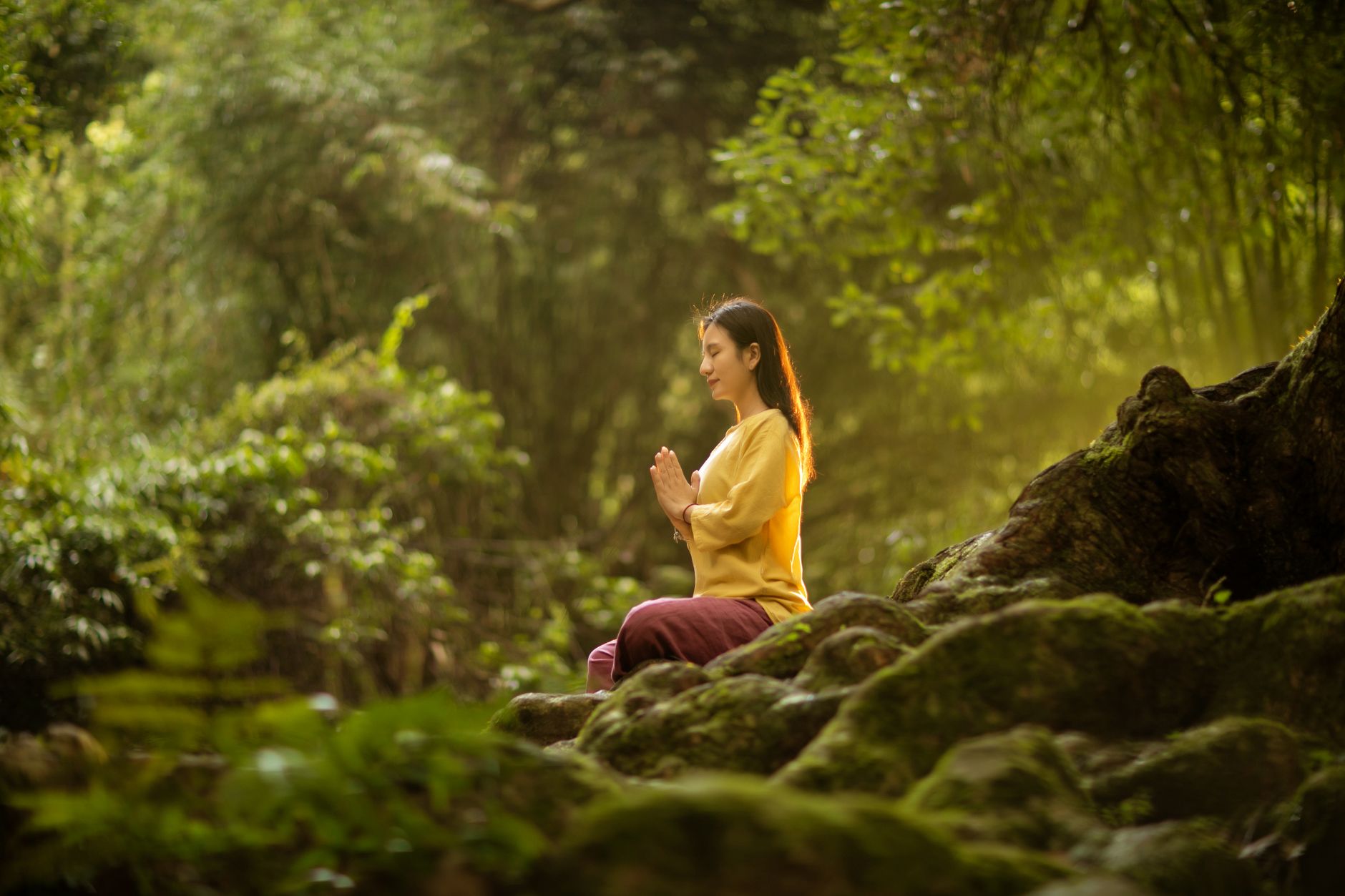
What Priya experienced has a name in the research literature: attention restoration. Psychologists Stephen and Rachel Kaplan spent decades studying how directed attention — the kind we use to filter emails, resist distractions, and make decisions all day — works like a muscle that fatigues. Natural environments restore it because they engage what they called “soft fascination.” Sunsets, moving water, rustling leaves. These hold your gaze gently without demanding anything from you. The result is not boredom. It is recovery.
Photo by RAY LEI on Pexels
Then there is the default mode network, a set of brain regions that switches on when you stop actively focusing on a task. Modern life, with its endless small demands, keeps this network suppressed. That matters more than most people realise. The default mode network is where consolidation, self-reflection, and creative connection happen. Suppress it long enough and you get the 2 a.m. thought loops, the foggy feeling, the sense that you have not had a single original idea in months. Slowing down is not laziness. It is maintenance.
Here is a counter-intuitive point I make to nearly every client: the urge to optimise your rest is the very thing that prevents it. The moment you turn a holiday into a productivity project, tracking your meditation minutes and scheduling your gratitude journal, you have simply swapped one form of striving for another. Rest resists measurement.
Research on what Shelley Gorman and colleagues call “awe experiences” adds another layer. Standing beneath a glacier, watching a whale surface, or simply looking at a sky thick with stars reliably reduces rumination and increases feelings of smallness in the best possible way. Your problems do not vanish. Their proportions shift. That shift is often what people mean when they say a trip changed them.
One more finding worth holding onto: the benefits of travel do not come mainly from the destination. They come from the interruption of routine. A 2021 study on vacation effects found that the largest gains in wellbeing came in the first few days, driven less by where people went than by the fact that they stopped doing what they always do. This is good news. It means you do not need an exotic location. You need a genuine break in pattern.
Destination Recommendations
1. The Japanese Alps, specifically the Kiso Valley. This is a string of preserved post towns along the old Nakasendo walking route. You walk between villages on stone paths through cedar forest, and your luggage is forwarded ahead so you carry only a daypack. The pace is set by the terrain, not by you. Most people manage ten to fifteen kilometres a day, which is enough to feel earned but not punishing. Evenings are spent in family-run inns with communal baths and set dinners. There is very little to do, which is precisely the point. The soft fascination here is constant: moss, water, birdsong, the sound of your own footsteps. The rhythm of walking mirrors the rhythm of the breath. Clients often report that anxious thought patterns loosen after the second day.
2. The west coast of Ireland, County Clare in particular. I recommend basing yourself in a small village near the Burren and giving yourself a week with almost no plan. The Burren is a limestone landscape that looks barren from a distance and is, up close, covered in wildflowers growing out of cracks in the rock — a genuinely useful metaphor for anyone recovering from burnout. Walk the coastal path above the Cliffs of Moher early in the morning before the tour buses arrive. Sit in a pub with a book in the afternoon. Rain will interrupt your plans, and that interruption is part of the therapy. Learning to let weather decide your day is a small, repeated lesson in surrendering control.
3. The Faroe Islands. Eighteen islands in the North Atlantic, connected by tunnels, ferries, and one very small helicopter network. The landscape is dramatic and the population is tiny. What makes it exceptional for slowing down is the weather-driven unpredictability: fog rolls in and your hike is cancelled, so you sit in a café in Tórshavn and watch the harbour instead. There is almost no nightlife, no shopping, and limited phone signal in many valleys. You will be bored by day three. Stay through it. Boredom is the doorway.
Photo by Nataliya Vaitkevich on Pexels
What to Expect
Days one and two are usually uncomfortable. This is normal and I want you to plan for it. You will feel restless. You will reach for your phone. You may find yourself irritated by the quiet, or by your partner, or by the fact that the café does not have oat milk. Your nervous system is used to a high level of stimulation and it will protest the drop. Do not interpret this as failure. Interpret it as withdrawal.
Day three tends to be the turning point. Sleep deepens. You notice things you would normally walk past: the specific colour of the light, a dog barking three streets away, the taste of bread. Appetite returns. Conversations get longer and slower.
By days four and five, most people report something harder to name. A sense of spaciousness. Ideas surface that have been buried for months. You may find yourself thinking about work, but differently, with perspective rather than panic. Clients often describe this as “hearing myself again.” It is the default mode network coming back online.
Days six and seven bring a quiet grief, because you know you are leaving. This is worth acknowledging rather than rushing past. The last day is not about cramming in one more hike. It is about noticing what you are taking home.
What you should not expect is a permanent transformation. You will return to your inbox. The benefit of a slow trip is not immunity to stress. It is a remembered reference point — a felt sense of what your baseline actually is, which makes it far easier to notice when you have drifted away from it.
Cost & Logistics
Budget varies enormously by destination and season, but here are honest ranges based on what I have seen work.
Japan (Kiso Valley, 7 nights): roughly €1,800–2,600 per person, including mid-range inns, half board, rail passes, and luggage forwarding. Shoulder seasons (May, October) are cheaper and quieter.
Ireland (County Clare, 7 nights): roughly €1,100–1,700 per person, including a rental car, a self-catering cottage or B&B, and pub meals. Car hire is essential outside towns; book an automatic well in advance.
Faroe Islands (7 nights): roughly €1,400–2,200 per person. Flights from mainland Europe are the main variable. Accommodation is limited, so book three to four months ahead for summer.
Universal rules: book direct with small guesthouses where possible, build in at least two completely unplanned days, and tell people at home you will be slow to reply. A pre-written auto-reply is a kindness to yourself.
Travel insurance that covers hiking is worth the small extra cost. Pack layers rather than a heavy coat. Bring a paper book — it forces a different kind of attention than a screen, and you will be grateful for it on a rainy afternoon.
FAQ
How long does a slow trip need to be? A minimum of five nights. Below that, you spend the first two days decompressing and the last one anticipating the return, leaving very little middle. Seven to ten nights is the sweet spot for most people.
Can I do this with children? Yes, and it often works better than a theme park. Children slow down faster than adults. Choose a destination with walking, animals, and water, and resist the urge to fill every hour.
What if I get bored and hate it? You probably will, briefly. Boredom is a stage, not a verdict. Sit with it for a full day before deciding anything. If it still feels wrong, change one thing — move towns, take a train, find a swimming spot. Adjusting is allowed. Abandoning the whole idea is usually premature.
You do not need to fly anywhere to begin. The mechanism is interruption of routine, and that can start with a single afternoon walk without your phone. But there is something about distance from home that makes the interruption harder to undo, and that is why I keep sending people away. The world will still be fast when you return. You will simply have a clearer memory of what your own pace feels like, and a little more courage to defend it. Start with one week. Start with one valley, one coastline, one island. The quiet is waiting, and it is far less frightening than the noise you have grown used to.