
You don’t need another vacation. You need a way to arrive. That’s the distinction I keep returning to after fifteen years of clinical psychology practice and a decade of designing my own trips around nervous system recovery. Most people book travel to escape something. A job. A grief. A mind that won’t stop rehearsing conversations from three years ago. Then they land somewhere beautiful and feel exactly the same — just with better scenery and worse sleep. Grounding while traveling isn’t about finding the perfect retreat or downloading a meditation app in the airport lounge. It’s about building small, repeatable anchors that travel with you. Through time zones, strange beds, unfamiliar food, and the particular loneliness of a hotel room at 2 a.m. Your body already knows how to do this. It just needs permission and a little structure.
Last spring I sat with a client named Mira on a bench outside a train station in Kyoto. Eleven days in Japan. She had cried at four temples. Not from beauty — from exhaustion. “I feel like I’m failing at this,” she said. I asked what she’d eaten that morning. Nothing. What time she’d gone to bed. Past two. How many cities in how many days. Five. She wasn’t failing at travel. She was failing at being a human animal in motion.
The Science
Your vestibular system — the inner ear structures that manage balance — works in constant dialogue with your vagus nerve, your gut, and your prefrontal cortex. Move quickly through space, by plane or train or winding road, and that system stays in a low-grade alert state. Researchers call this “sensory mismatch.” It’s one reason travel can feel disorienting even when nothing is wrong. Add disrupted circadian rhythm, unfamiliar social cues, and decision fatigue from navigating a foreign city, and you get a nervous system that’s technically on holiday but functionally on guard.
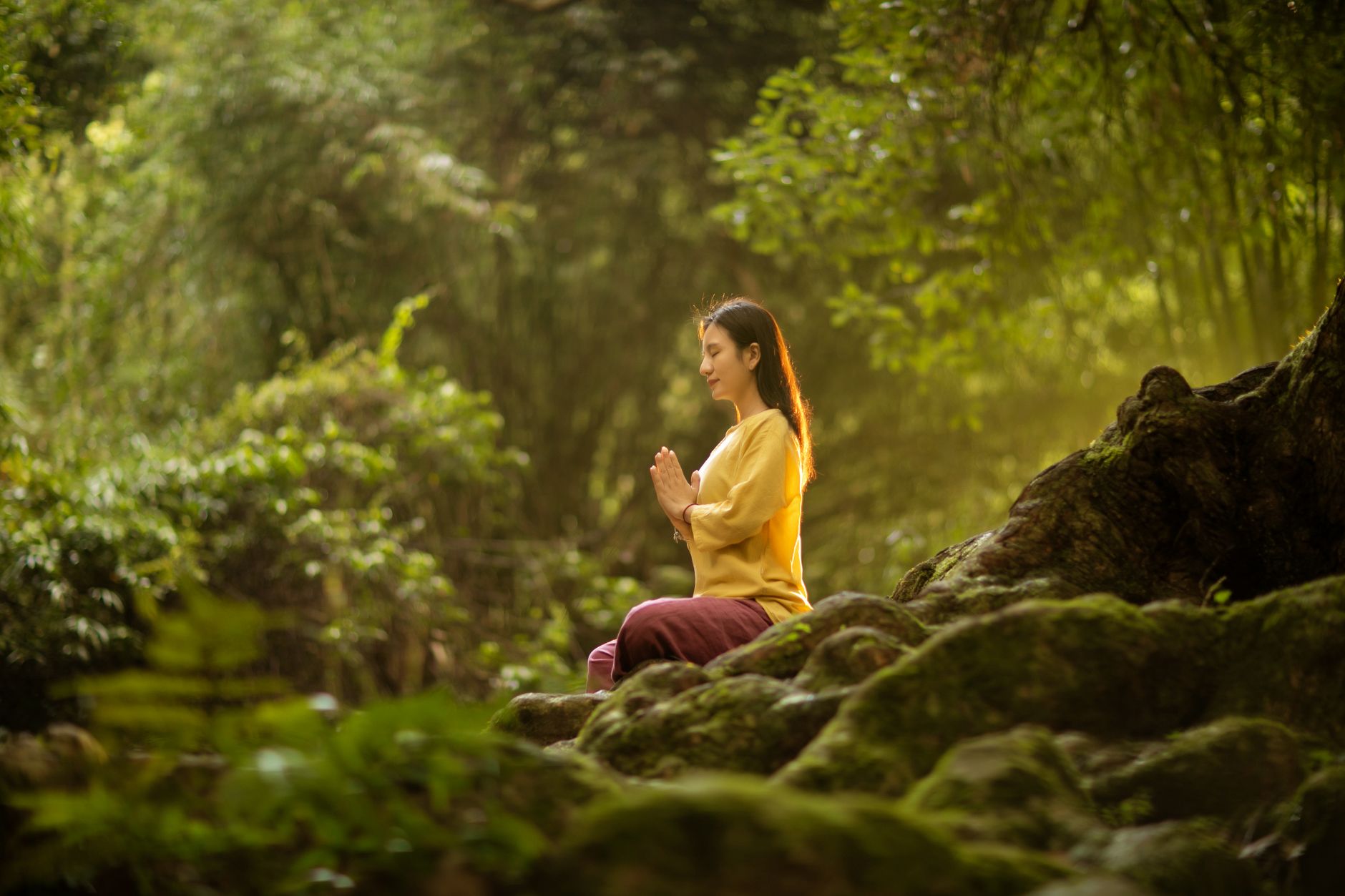
Polyvagal theory gives us a useful frame. Grounding isn’t a spiritual concept. It’s a physiological shift from sympathetic arousal into ventral vagal regulation. You feel it as a loosening in the jaw, a deeper breath, a return of curiosity. The tools that produce it are boringly simple. Slow exhales. Bare feet on cold stone. Humming. Eye contact with a kind stranger. The weight of a warm cup in your hands. None of these require a yoga mat or a silent retreat. They require repetition.
Here’s the counter-intuitive part. Most wellness travel advice tells you to slow down, and that’s often wrong. Slowing down without structure can drop you into rumination. I’ve watched more travelers unravel on empty beach days than on packed itinerary days. The nervous system doesn’t need less input. It needs predictable input. A morning routine you keep. A walk you take at the same time. One meal you eat without your phone. Sameness inside novelty is what actually regulates you.
Research on attention restoration theory supports this too. Natural environments restore directed attention, but only when you’re not also managing logistics. So the goal isn’t more nature. It’s fewer decisions inside nature. That’s why a three-day stay in one village beats a seven-day tour of seven towns. Every time.
Destination Recommendations
Bhutan, specifically the Haa Valley. Bhutan gets marketed as a spiritual destination. Partly true. Partly a tourism board’s dream. The Haa Valley, west of Paro, receives a fraction of the visitors. Altitude sits around 2,700 meters, which forces slower movement whether you like it or not. Guesthouses are family-run, meals are simple, and the daily rhythm is set by weather and prayer flags rather than by you. The mandatory Sustainable Development Fee is steep, but it functions as a natural crowd filter. You will not be competing for stillness.
Puglia, southern Italy, in late September. I recommend this to clients who need warmth and structure without the intensity of a full retreat. Stay in a masseria — a converted farm estate — outside Ostuni or Cisternino. The region empties after August, olive harvest begins, and the light turns golden by four in the afternoon. Build days around a single activity. A market visit. A coastal walk. A long lunch. The Adriatic and Ionian coasts sit within an hour of each other, which means you can alternate sea and countryside without packing a bag.
The Big Island of Hawaii, specifically the Kona side in shoulder season. Yes, Hawaii is over-traveled. No, that doesn’t ruin it if you choose well. Skip the resort strip. Stay in a small bed and breakfast above Holualoa, in the coffee belt. Mornings are cool and quiet. The volcanic landscape gives you a genuine sense of scale, which is one of the fastest ways to interrupt anxious self-focus. Avoid the vog-heavy weeks if you have respiratory sensitivity, and don’t try to see the whole island. Pick one coast. Stay there.

What to Expect
Day one is usually a mess. You’ll arrive wired, sleep badly, and wonder why you spent money to feel this way. Normal. Don’t schedule anything for the first twenty-four hours except a walk and a meal.
Day two brings the first real shift. If you’ve slept even six hours and eaten something warm, your body starts to believe you’re safe. This is when a morning routine matters most. Ten minutes of slow breathing before you check your phone. A cup of tea you drink standing at a window. A short walk in the same direction both mornings.
By day three, something loosens. You’ll notice you’re not reaching for your phone every four minutes. Conversations with strangers feel possible. Food tastes like food. This is the window where people often over-schedule, trying to “make the most” of feeling good. Resist that. The feeling is the point.
Days four through six are the deep part. Sleep consolidates. Dreams return. You may feel unexpectedly sad — this is common and not a sign anything is wrong. When the nervous system finally relaxes, it often releases what it’s been holding. Let it. Don’t try to fix it with an excursion.
If you’re staying a full week, day seven often brings a small grief about leaving. That’s a good sign. It means you actually arrived.
Cost & Logistics
Bhutan runs high. The Sustainable Development Fee alone is around $100 per person per day, before accommodation and flights. Realistic budget for a week in the Haa Valley: $2,800 to $4,200 per person, including the mandatory guide. Flights connect through Delhi, Kathmandu, or Bangkok. Book at least three months out.
Puglia is the most flexible option. Shoulder-season masserie range from €120 to €350 per night. Rental cars are essential and cost €40 to €70 per day. Total for a week, including food and fuel, sits between €1,400 and €2,600 per person. Fly into Bari. Trains exist but won’t get you to the countryside.
Hawaii lands in the middle. Kona B&Bs run $180 to $320 per night in shoulder season. Rental cars are necessary and often sell out. A week, all in, runs $2,200 to $3,500 per person. Fly into Kona, not Hilo, unless you’re committed to the east side.
Across all three, the logistics that matter most are unglamorous. Book accommodation for the full stay rather than hopping. Arrive in daylight if you can. Pack one familiar item — a pillowcase, a tea, a pair of socks — that signals home to your body.
- Keep one morning ritual identical every day, no matter where you wake up.
- Cap yourself at one major activity per day. One. Not three.
- Eat at least one warm, sit-down meal daily, ideally at the same hour.
- Walk barefoot on natural ground for ten minutes when possible.
- Protect the first night. No plans, no screens after nine.
Frequently Asked Questions
How long does it take to actually feel grounded on a trip? Most people notice a shift by day three if they’re sleeping and eating reasonably. Full regulation takes five to seven days. Shorter trips can still help, but don’t expect the deep reset.
Do I need a meditation practice to do this? No. Slow exhales, walking, and consistent meals do more for most nervous systems than a formal practice. If meditation helps you, keep it. If it makes you restless, skip it without guilt.
What if I feel worse instead of better? That’s common and usually temporary. Relaxation can surface grief or anxiety that was being held at bay. If it persists past a few days or feels overwhelming, reach out to a therapist. Travel is a tool, not a treatment.
Grounding isn’t a destination you reach. It’s a rhythm you keep. The travelers who come home restored aren’t the ones who found the most beautiful places. They’re the ones who gave their bodies something predictable to hold onto while everything else moved. So here’s my question for you: when you imagine your next trip, are you planning where to go, or how you’ll arrive? The second one is where the work is, and it’s the part no guidebook will do for you.