
Travel with a chronic illness is not a contradiction. It’s a negotiation — one that thousands of people with lupus, Crohn’s disease, fibromyalgia, MS, POTS, and long COVID navigate every year. The old story says that when your body is unreliable, your world should shrink. Stay close to your specialists. Stay close to your bed. Stay safe. I’ve watched that story steal years from people who were perfectly capable of seeing the world — just not in the way the travel industry assumes everyone can.
What I’ve learned, both in my practice and on my own journeys with endometriosis and migraine, is that travel can be one of the most powerful interventions available to someone living with a chronic condition. Not because it cures anything. Because it restores something the illness quietly erodes: the sense that you are a person with a life, not a diagnosis with a schedule.
Maria, a client of mine with relapsing-remitting MS, sat across from me last spring and said she’d cancelled a trip to Lisbon for the third time. “I keep waiting to feel well enough,” she told me. “I think I’ll be waiting forever.” That sentence stopped me. She wasn’t wrong about her body. She was wrong about what travel requires.

The Science
Research on travel and mental health has grown steadily over the past decade. The findings are more nuanced than the glossy magazine version. A 2021 study in Tourism Management found that the anticipatory phase of travel — planning, researching, imagining — produces measurable increases in positive affect, sometimes more than the trip itself. For someone whose daily life is dominated by symptom management, that anticipatory joy is not trivial. It’s a cognitive shift away from threat monitoring.
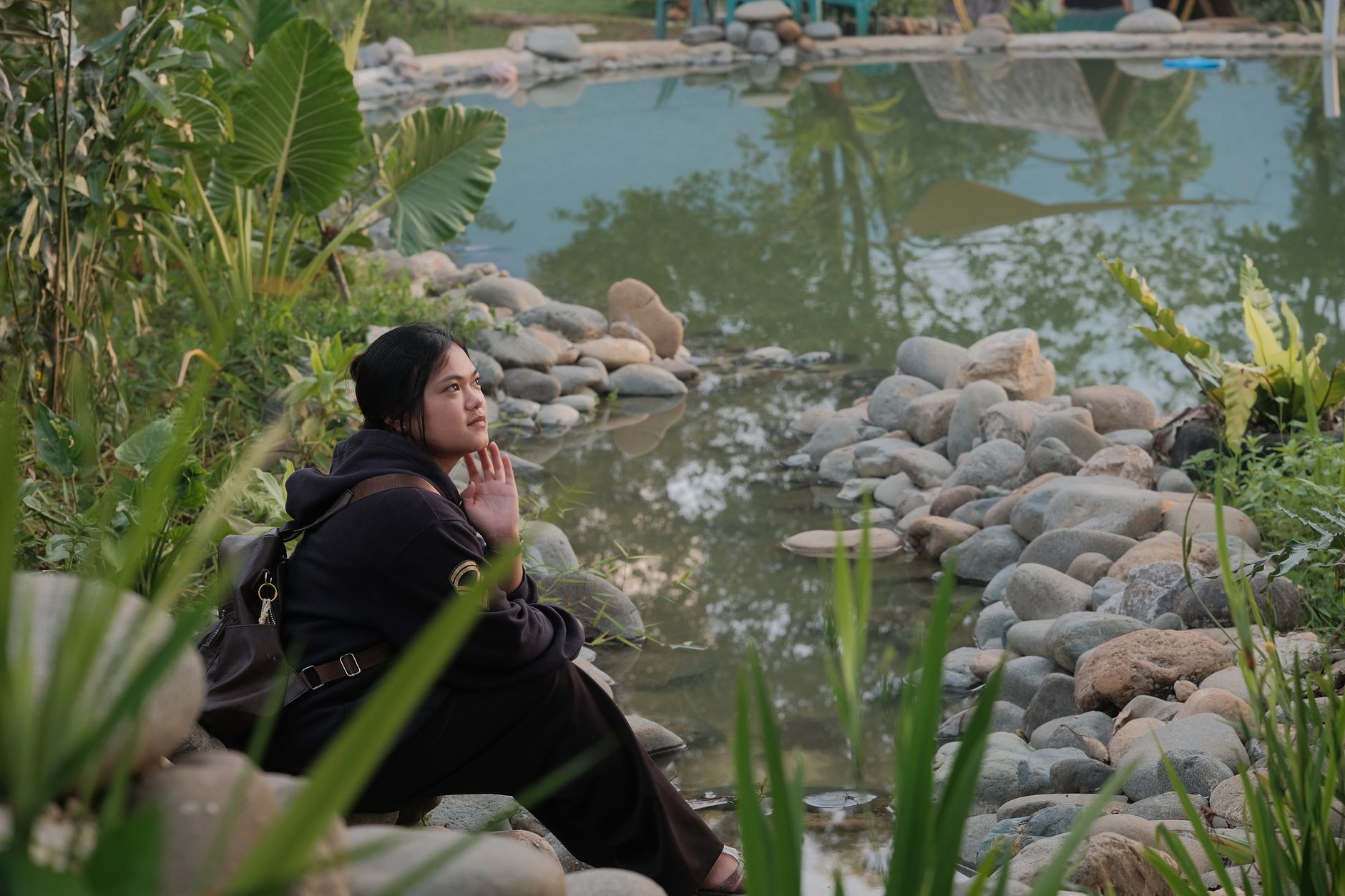
Then there’s the nature effect. A well-known 2019 meta-analysis in Scientific Reports showed that spending 120 minutes per week in natural settings is associated with significantly better self-reported health and wellbeing — a threshold that’s remarkably achievable even on a low-energy trip. You don’t need to hike. Sitting by a lake counts.
What about the stress-relief claim? Cortisol studies on vacationers show mixed results, partly because travel itself can be stressful. The travel that helps is the travel that fits your body, not the travel that pushes it. That distinction matters enormously for chronic illness.
Here’s my counter-intuitive opinion: rest is not the goal of wellness travel for chronically ill people. Meaning is. A slow afternoon in a courtyard in Seville, watching light move across stone, does more for the nervous system than a spa day that treats you as a passive recipient of wellness. The psychology of restorative environments — Rachel and Stephen Kaplan’s attention restoration theory — suggests that soft fascination, not passive luxury, is what actually replenishes a depleted mind.
But doesn’t travel flare you up? Sometimes, yes. And that’s the part most wellness articles skip. The trick isn’t avoiding flares. It’s building a trip where a flare doesn’t end the journey.
Destination Recommendations
Three places I’ve recommended repeatedly to clients with chronic conditions, chosen for accessibility, climate, pacing, and medical infrastructure.
Thermal towns of Hungary — Hévíz and Budapest. Hungary has one of Europe’s deepest traditions of therapeutic thermal bathing, and its medical infrastructure reflects it. Hévíz sits on the world’s largest biologically active thermal lake, and the surrounding clinics specialize in musculoskeletal and rheumatic conditions. Budapest’s Széchenyi and Gellért baths offer accessible entry, warm water year-round, and a culture where soaking for hours is normal, not indulgent. Flights to Budapest are short from most of Europe, and the city is flat, walkable, and well-served by taxis and trams with step-free access on many lines.
Kyoto in shoulder season. April and November get crowded, but late May and early October are quiet, mild, and stunning. Japan’s approach to accessibility has improved dramatically ahead of the Paralympics, and Kyoto’s temples increasingly offer wheelchair-accessible routes. The real draw for chronic illness travel is the pacing culture: tea ceremonies, garden sitting, slow meals. Nobody rushes you. Ryokan with private onsen let you soak without heat or crowd concerns. Pharmacies and English-speaking clinics are widespread.
Santa Fe, New Mexico. For those who can’t manage long-haul flights, Santa Fe is a strong domestic option. High desert climate helps some people with autoimmune conditions (and worsens others — check with your doctor). The altitude is 7,000 feet, so plan a slow first two days. What makes Santa Fe work is the density of healing modalities: traditional curanderismo, integrative medicine clinics, spa culture rooted in Indigenous traditions, and a pace that respects fatigue. The Georgia O’Keeffe Museum and the railyard district offer low-energy cultural days.
What to Expect
Day one is usually a wash. Flights dehydrate, disrupt sleep, and compress your body into positions it doesn’t like. I tell clients to write off arrival day entirely. Check in, hydrate, eat something simple, sleep. Don’t try to “make the most” of it.
Day two often feels deceptively good. The novelty boost kicks in, you sleep decently, and you want to do everything. This is the trap. The flare usually arrives on day three or four if you overspend your energy on day two. Pacing means deliberately doing less than you feel capable of in the first 48 hours.
By day four or five, most travelers settle into a rhythm. You learn which hours your body cooperates, which meals sit well, which routes have benches. The trip starts to feel less like a performance and more like a life. This is when the psychological benefits show up — the sense of competence, the reconnection with identity beyond illness.
Expect at least one hard day. It might mean staying in bed with the curtains drawn while your partner explores alone. It might mean a cancelled dinner. Grieving that loss in the moment is normal. What matters is that one hard day doesn’t become the story of the whole trip.
Expect to need more rest than you think. Expect to be surprised by what you can do. Expect the trip home to require a recovery window of several days.
Cost & Logistics
Budget varies enormously depending on destination and needs, but realistic ranges look like this. A one-week trip to Hungary, including flights from Western Europe, accessible accommodation, thermal bath entries, and one or two medical consultations, runs roughly $1,800–$3,200 per person. Kyoto for a week, with a mid-range ryokan and some accessible transport, lands around $3,000–$5,500 including flights from North America. Santa Fe for five days, domestic US, sits at $1,500–$2,800.
Logistics deserve more planning than the average trip. Key considerations:
- Book accommodation with a kitchenette or at least a fridge — medication storage and safe food matter more than hotel amenities.
- Research the nearest hospital and pharmacy to your lodging before you arrive, not after you need them.
- Carry a written medication list, including generic names, in the local language if possible.
- Buy travel insurance that explicitly covers pre-existing conditions — many standard policies exclude them.
- Request wheelchair assistance at airports even if you don’t use one daily; long walks through terminals are a common flare trigger.
- Build in a buffer day before and after the trip for rest, not just travel.
Travel with a companion when you can. Solo travel with chronic illness is possible and sometimes preferable, but having someone who knows your baseline and can advocate for you changes the safety calculus considerably.
FAQ
Is it safe to travel during a flare? Generally no. Acute flares are not the time to test your limits. Wait for a stable baseline, and discuss timing with your specialist. Travel during remission or a well-managed period is different from travel during active disease.
What if I need medical care abroad? This is why pre-trip research matters. Know the nearest hospital, carry your records, and consider a travel medicine consultation. Most major cities have English-speaking clinics. In an emergency, your embassy can help.
How do I handle people who don’t understand invisible illness? You don’t owe anyone an explanation. A simple “I have a health condition and need to rest” is enough. If you’re traveling with someone who struggles to accept your limits, that’s a conversation for before the trip, not during it.
The point of travel with chronic illness isn’t to prove you can do everything. It’s to discover what you can do — and to let that discovery reshape how you see yourself. Maria went to Lisbon last October. She had two hard days and four good ones. She sat by the Tagus at sunset and cried, she told me, because she’d forgotten she could feel like a person in the world. That’s not a cure. It’s something better. It’s evidence.